05.02.08 - Qosq'o (Cuzco)

Inca Adulation

There are few places which innately "feel like" the center of the known world and this is one of them.  Greek mythology places the navel of the earth in Delphi, where its powers equipped the oracle with foresight.  Polynesian culture settles the planetary belly button (also an "outtie") on the coast of Easter Island, while the Inca cultural belief endows the first Inca (ruler), Manco Capac, with finding the "qosq'o" right in the center of what Spanish colonization has linguistically morphed into the city name of Cuzco.  From the 12th century until conquest by Francisco Pizarro in 1533, Qosq'o was the capital and literal center of the Inca world.

P1010167

It is not "corny" to aptly describe the oldest continuously inhabited city in South America as "grand". Qosq'o has become an amalgamation of firm Inca foundations, topped with colonial architecture.

P1010184

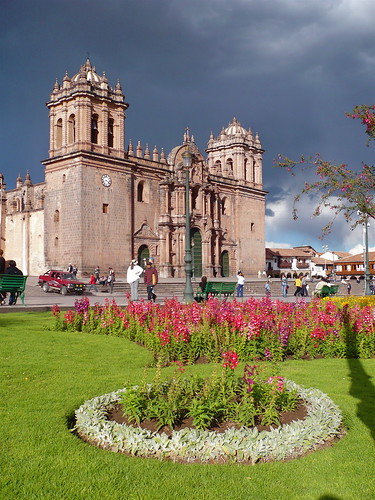
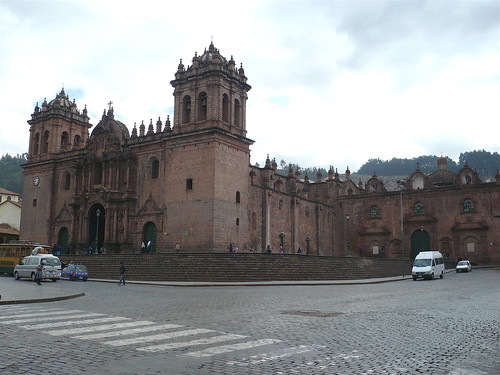
The Spanish conquistadors took pride in leveling each Inca cultural center along the pillaging path, and where deemed appropriate, replaced native structures with imperial icons.  Such is the case with the cathedral of Cuzco, placed on the foundations of the razed 12th Inca's ruling palace.  
P1010181

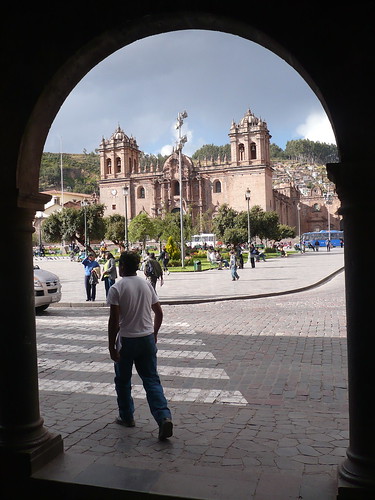
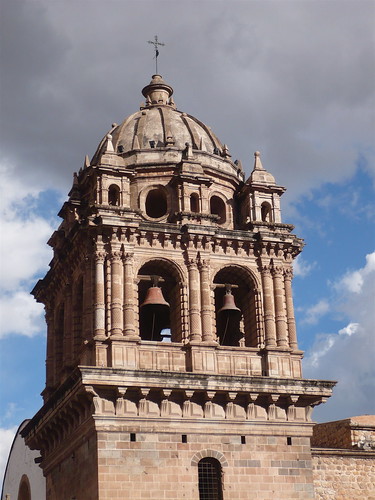
If one can set aside the conquistador bludgeoning of the Inca populous, the Plaza de Armas is stunning.  The central garden is the best kept I've seen in South America.  If you can find an open bench, sit and soak in the ambiance.  Anytime of day is perfect and you just might need the rest from the less dense oxygen availability at this altitude.  (I couldn't decide which "cathedral picture" to post, so you get them both.)

P1010180

Look up to catch a glimpse of exquisitely crafted towers, ...
P1010194

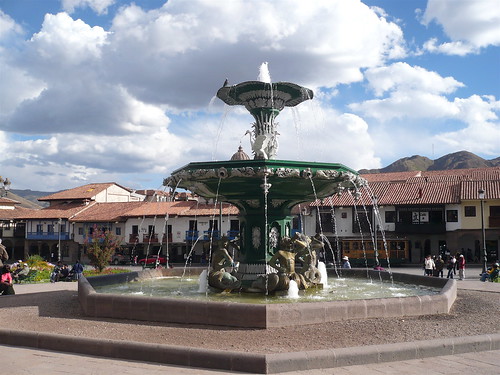
... or enjoy a fountain-side moment.  The senses seem to be stimulated by the emitting energy of this former capital city.
P1010175

Befitting any major Spanish colonial center, there is no shortage of very large churches.  "Kitty corner" to the cathedral is the equally impressive Iglesia de La Compania de Jesus.  (I hear the tour is worth the effort, but we were all "big churched out", opting to enjoy the external architecture.)

P1000561

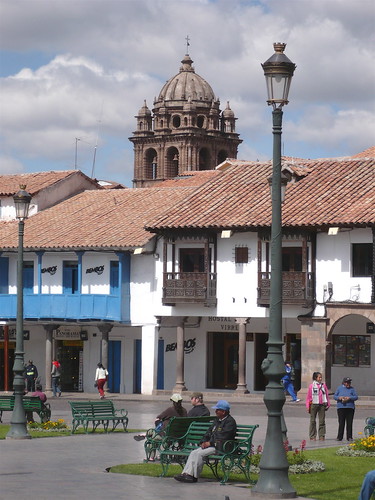
Three main squares anchor the downtown and Plaza San Francisco could easily be spotted from Plaza Regocijo by sighting the bell tower of Iglesia de San Francisco.
P1000559

We had three main objectives for the day:  (1) explore, (2) buy rail tickets to Machu Picchu, (3) find better accommodations.  We were well under way on the exploring front and found that Qosq'o has incredible restaurants and I mean that in a local and metropolitan comparison context, i.e. no holds barred this was good food, 4 stars at 2 star pricing.  So, filled with brunch we headed to find a hotel and the train station.
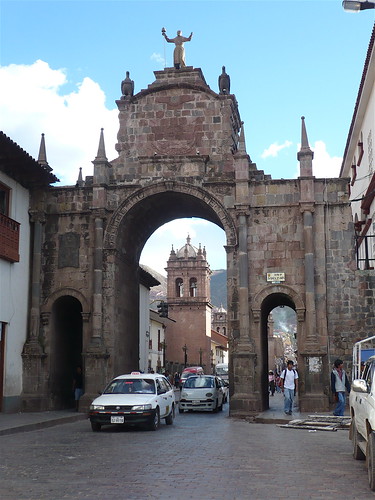
P1010204

Historic Qosq'o is charming for a street plan hundreds of years in the making.  By modern standards, each street would be a tight single lane, which could even make a European flinch.  Taxi's and locals manage by driving extremely small cars and squeezing up to the sidewalks to pass stopped vehicles only on select streets.  For comparison, this was the broadest street I could find, which led down to the central market.  (Note the linguistic "middle ground" spelling on the hill side of "Cusco", replacing the Spanish installed "z" with the phonetically Incan "s". )

P1000575

Western Qosq'o is known for artisan neighborhoods.  Hand crafted doors, painted in a blue familiar of the Mediterranean and the Moroccan Rif mountain town of Chefchaouen, pronounced their electric presence on the white building  backdrop.
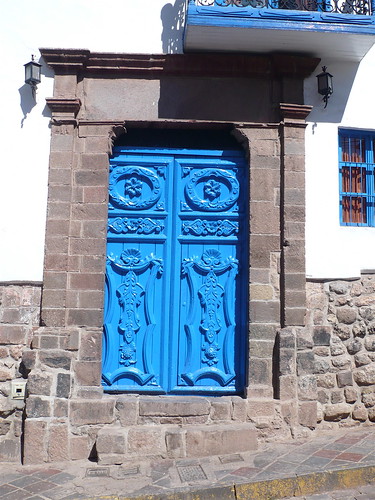
P1000570

On the way to the new hotel, Hotel Los Ninos, we passed through quadrangles dedicated to tailoring and then entered the music guild neighborhood.  (Note the harps carved into the balustrades above the entrance.)

P1000574

After securing rooms, we headed back through the Plaza de Armas, and on to the train station offices, for information on train tickets to Machu Picchu.  Our backpacker sense of monetary perspective was STUNNED.  For instance, first class train fare is over $600 USD round trip or a more manageable $140 USD for "backpacker class".  Believe it or not all these tickets were sold out for literally months in advance.  So, our choice had become "find a way to the town of Ollantaytambo and catch a train from there for roughly $60 USD return.  The actual ticketing process takes hours of multiple quaying opportunities, but in the process we met a couple of Dutch guys and decided to split a cab tour of the Sacred Valley with them on the way to Ollantaytambo.  Success!  Now we were only a single day of touring away from one of life's great aspirational moments, climbing Machu Picchu.
P1000554


05.01.08 - To Cuzco


Inca Indoctrination

Crossing the border from Bolivia to Peru one thing is definitely clear, the Peruvian tourist industry knows there's a difference between "cattle class" and "courting currency class".  For around twenty dollars one can take an ultra-modern tourist coach from Puno all the way to Cuzco.  I'm sure during "high season" this bus is packed, but for the less than a dozen passengers boarding today, it was portable luxury.  One ticket provides not only transportation but tour guide, multiple "point of interest" stops and a buffet lunch.  As much as I loved the rustic nature of Bolivian travel, "Vive la contrast!" 

CIMG8696

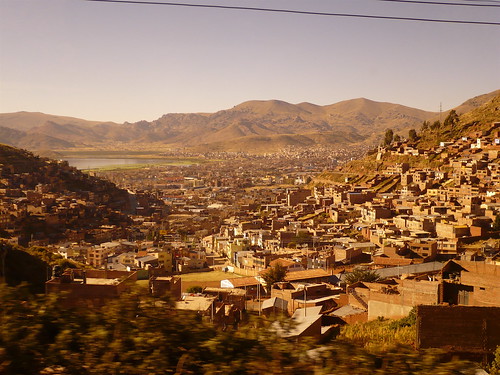
Elevated by the potential of the day, Puno actually looked picturesque, passing by through UV tinted windows and low spectrum morning light.

P1000475

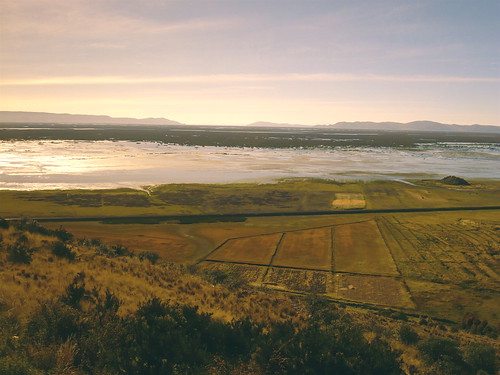
Over the first rise, the shallow bay side depths of Lake Titicaca spawned thick groves of totora reeds. The volume needed to serve as a useful resource for crafting boats, houses, and floating islands now came into perspective.

P1000485

La Raya, which is the highest mountain pass in Peru, was our first tourist stop of the day.  This location provided the first opportunity for bus drivers to "stretch their legs" as aside from the view, this gravel turnout is solely populated with eager craft vendors.

CIMG8715

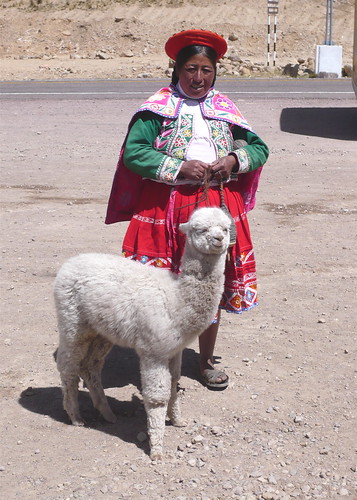
"Picture? Picture? ... Two dollars."  Well that's true if you stand with the actual llama.  This distance shot elicited a dollar donation to the cause.

P1000517

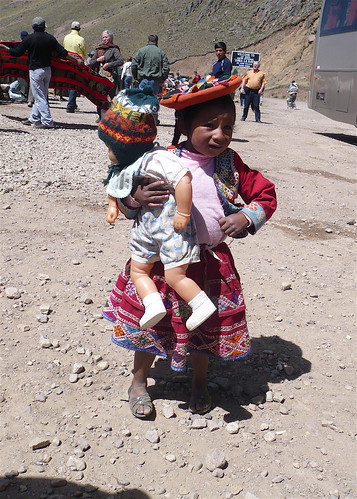
Who couldn't help support the mother of this cute little girl.  It was perfect, we both spoke Spanish on the same level, so life was good and I got to learn all about her doll "Pedro".  She was so tiny, it was almost as if a "live doll" were carrying a plastic one.  However, there was no doubt as to which one was truly animated, with her child-like excitement and care for her "nino" companion.

P1000513

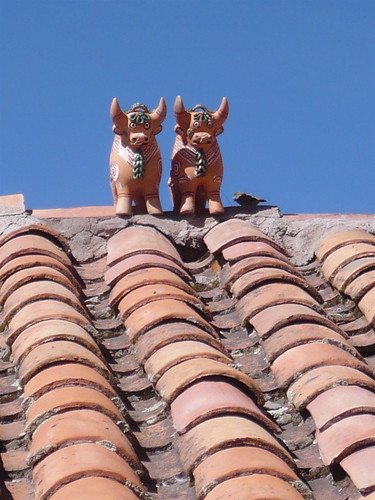
Another hour and a half further down the road we stopped at a regionally impressive Inca (local spelling Inka) museum, where photography was strictly prohibited, with two exceptions.  First was the production and installation of "good luck" bovine caricatures along the roof line.  Hey, Germans cut a sapling and nail it to the highest point in a roof under construction, so who's to knock the Peruvians for having a differing luck avatar.

P1000489

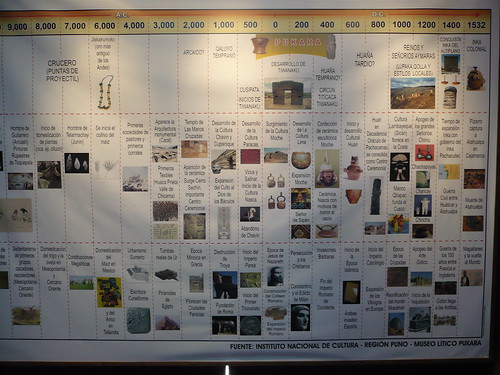
The other photo point was this historic timeline of native civilization, as compared to "Western" cultural development.  It was actually really informative, so feel free to "zoom in" and take a look at the parallels. 

P1000488

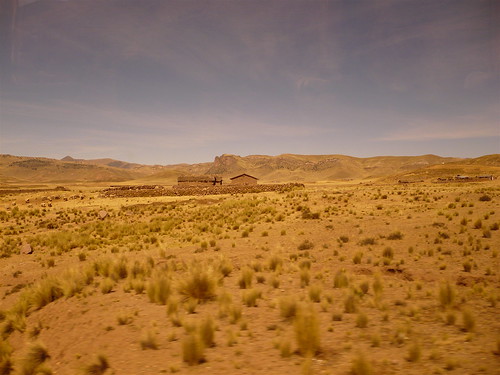
Peru continues to be an arid land.  Maybe all the lush green pictures of Machu Pichu and the excitement to see this wonder have led to a visual "tourist bias".  With a little expectation clarity, the desolate ranch lands of Southern Peru are really quite spectacular...

P1000506

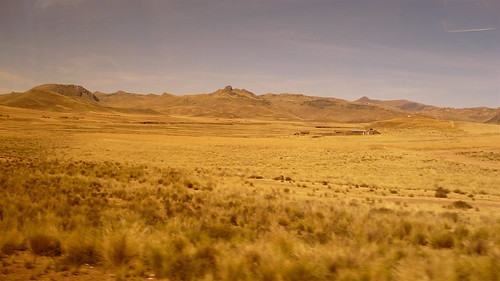
... in the same way that the American Southwest draws its own beauty.

P1000507

The day's schedule included almost hourly stops along the way.  Compared to the drone of a non-stop route, we welcomed the diversions and cathedrals would soon become the theme.

P1000504

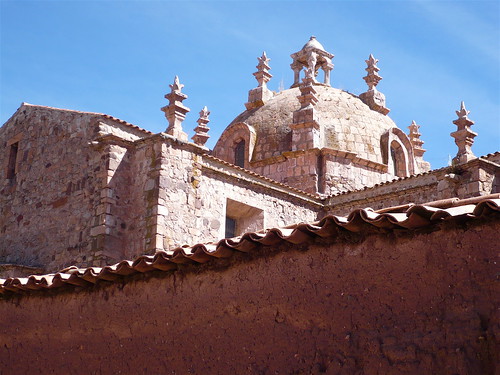
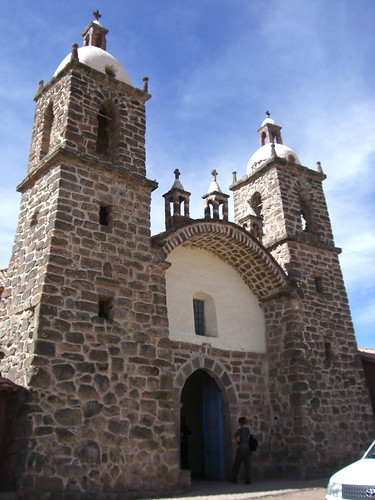
Architecturally, these stone and mud-brick structures dominate most of the small town skylines.  The detailed four-hundred year old effort caught both the sun and our eye.

P1000492

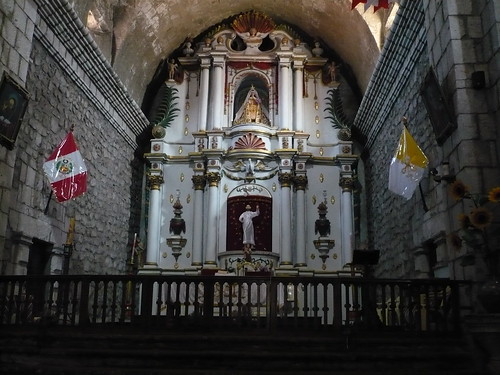
Once inside, we learned a few cultural points from our local guide.  (FYI, "English Speaking Guide" is a very relative concept, but since we were traveling on a national holiday the "Spanglish" effort was appreciated.)  The "upside" of non-traditional guiding was to receive a slightly less edited perspective.  Our guide pointed to Spanish conversion efforts, as a controlling mechanism of the local populous (similar to the Potosi efforts in Bolivia).  In a convenient belief blender Mary was elevated as the Inca replacement for Pacha Mama or the deified Mother Earth.  Shiny objects, such as mirrors, were embedded in the altars to mystify the locals.  Ultimately, according to the guide, religious efforts were really about management and control of a native people as a submissive labor resource in the wealth mechanism of the Spanish Empire.

P1000494

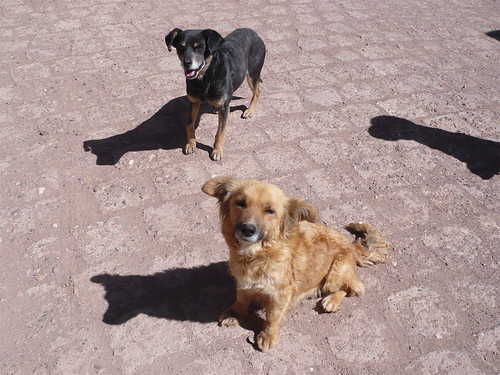
On a lighter note, Lipika and I were captivated by this blond stray puppy.  He was so good and cute we just wanted to... send him to a Vet, get all needed rabies shots, have him bathed, flea dipped, groomed... and then we might pet him... haaa.

P1000503

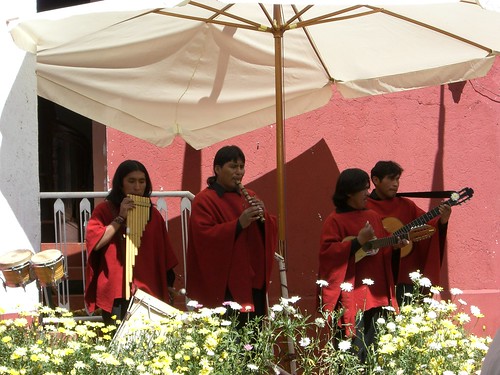
Lunch was provided at a quite good buffet restaurant and came accompanied by our first real dose of the cliche Peruvian Pipe band.  Yes, you can hear a similar group playing "The Condor Passes" at any shopping area literally all over the world, but somehow hearing the music while actually being physically located in Peru was soothing.

CIMG8724

Andahuaylillas was touted as the "Sistine Chapel of the Americas", by our tour group anyway, for the compliment of hand painted fresco walls.  It is good to be proud of local assets, but by this point, lunch had made many of us more interested in the museum facilities next door.

P1000541

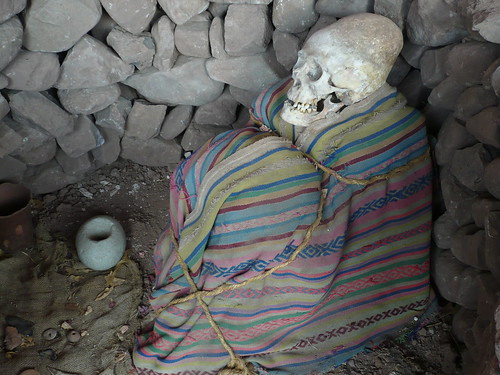
In the museum we caught an actual glimpse into an Inca nobility practice.  For some reason, the Inca thought it a sign of beauty and social standing to shape the skull into an extended conical design.  This process started with "binding boards" strapped to an infants cranium and continued until the post adolescent skeletal formation was complete.  That couldn't have been comfortable.

P1000549

Our next to last stop of the day was Raqchi, the Inca temple grounds dedicated to the god Wiracocha.  The complex entrance was flanked with a beautifully sturdy volcanic stone Catholic church.  In moments, the source of material would be clear.

CIMG8736

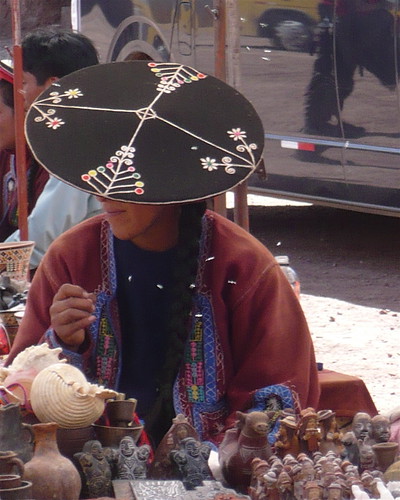
A maze of craft stalls slowed progress, but "high traffic" tourist locations provide for less aggressive vendors, leading to greater purchase intent.  Free to browse, I bought my sister a couple of curios for her "world travel" shelf.  The similarities of dress and physical manifestation between the truly native Peruvian people and Chinese mountain peoples is still striking.  The coloring and design of this hat reminded me of the Nashi women of Western China near Tibet.

P1000531

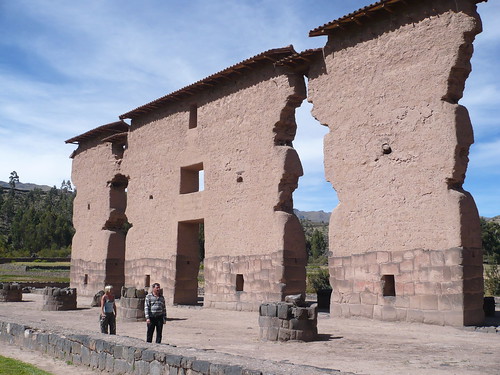
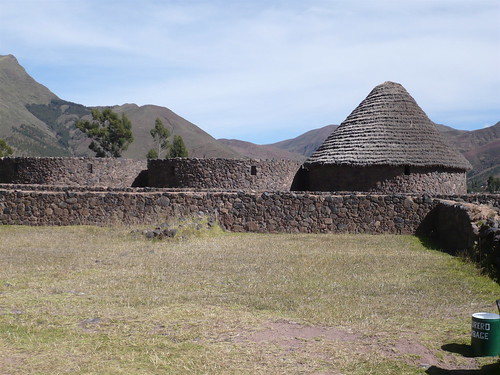
The remains of the the massive Inca temple are few but towering.  Foundations are built from darker volcanic rock and sand stone, with true elevation gained from courses of mud brick.  This five story center wall must have been very impressive over five-hundred years ago.  (Currently, all historic brick walls are capped with tile roofing to help preserve the remains.)

P1000535

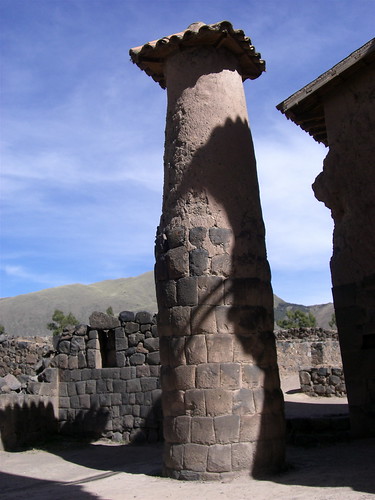
The load from massive wooden beams would have been shared with supporting columns.  Note the volcanic stone base and transition to earthen bricks.  What is important about this is that the nearest source of this type of stone is over ten kilometers removed.  So every piece of stone was hand carried over six miles to this position.

CIMG8743

Other, smaller buildings adjoin this main temple.  These structures are about two and a half stories in height and served as dormatories for temple virgins who attended religious instruction.  Similarly to the Greek custom, selection as a temple virgin granted very high familial esteem.    

CIMG8750

Most of these "trainees" would not make it through the culling process. Many would be returned to their families, a few would be chosen as secondary wives to the Inca class of nobility, and equally remote were the dual possibilities of either becoming a polygamous wife to the Inca ruler or living as an "actual temple virgin".

CIMG8751

The Inca civilization was socialist in many aspects, believing in certain "communal rights". Pivotal to successfully managing power was to insure that the populous was fed.  So harvest, by and large, became the property of the state, stored in time of abundance in anticipation of dearth.  Below are grain silos designed for the dry, high altitude, conditions.  Only the foundations of a few remain from over a hundred original buildings, hence the easy source of building supplies for the church building conquistadors. 

P1000537

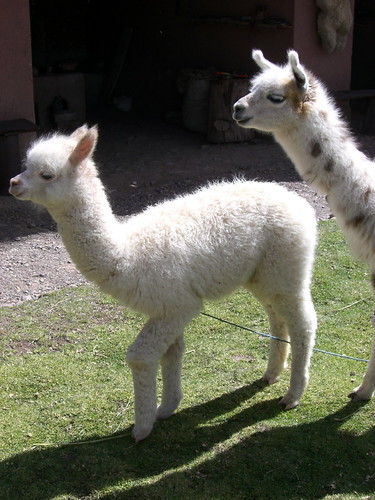
Last on our full day tour was a minor gift shop, home to a few incredibly soft alpaca.

P1000519

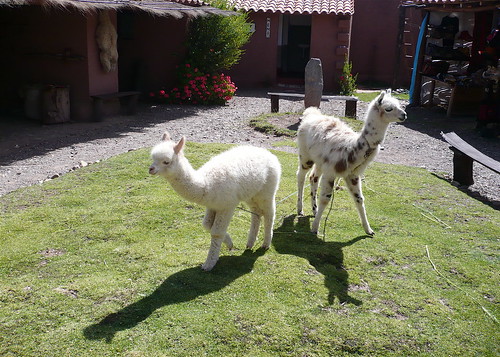
Who could resist the opportunity to feed this bundle of white fluffiness.  (Check out the white eye lashes.)

P1000524

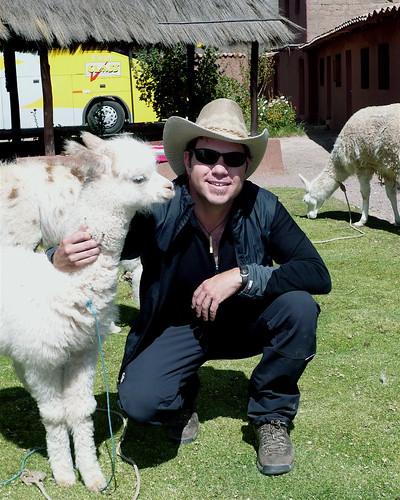
If you've never had the opportunity to touch a baby alpaca, go out of your way to try it.    

P1000528

There's nothing so soft and plush to be found in South America ...

CIMG8726

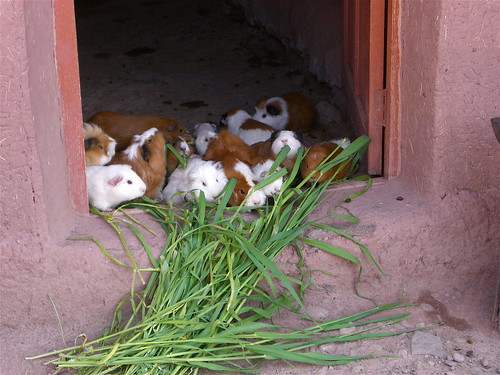
... unless, of course, you are a lover of guinea pigs... but we all know what they are used for here.  (I don't think there will be any temptation to repeat last night's dinner any time soon.)

CIMG8729

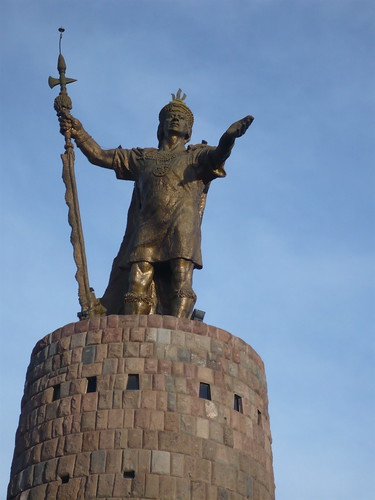
It is always an honor to be greeted by royalty, even if it is a 30 foot bronze Inca.  After a leisurely bus bound day, we were excited to be in the Inca capital of the world.  The setting sun added to the mystery of the location.  The thrill of exploration had returned!

P1000553

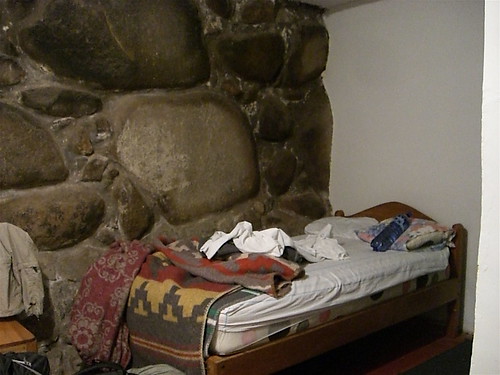
And now for those who persistently pester for more moments of in depth "travel reality", here you have it.  Way back in the Bolivian Amazon Basin... a bar tender who had been a native of Cuzco recommended that we stay at his friend's hotel.  Well, in the tourist and backpacker heavy Inca capital, twenty bucks will get you a cot with transparently thin sheets, itchy wool blankets, no running water (actually intermittent) and a local family partying until four in the morning.  Yikes, we needed to do better.

CIMG8758


04.30.08 - To Puno


Can You Peru?

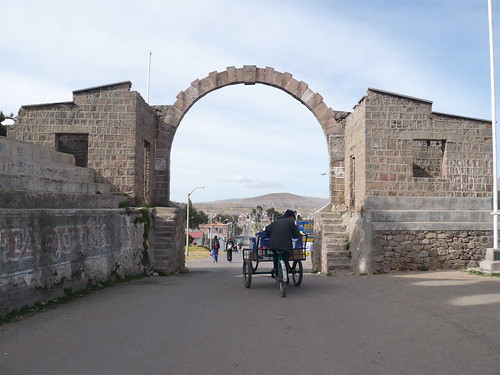
The Bolivia / Peru border was surprisingly "right around the corner" from the city limits of Copacabana.  The bus stopped not more than ten minutes into our journey on the Bolivian side, where of course I was extorted once again by uniformed Bolivian officials.  Upon entrance, along with my $120 USD dollar visa ($100 official tax & $20 that the official demanded to complete the process in less than a week, realistically a two minute procedure) an entrance card should have been given.  With no entrance card it was difficult to make an exit.  No worries, the official simply charged me twice the posted fee.  Unfortunately, I only had about one and a half the amount in a mix of US and local currency, which he accepted without hesitation.  Enough, a simple walk through the arch and this petty thievery would be reduced to less than an inconvenient memory.

P1000328

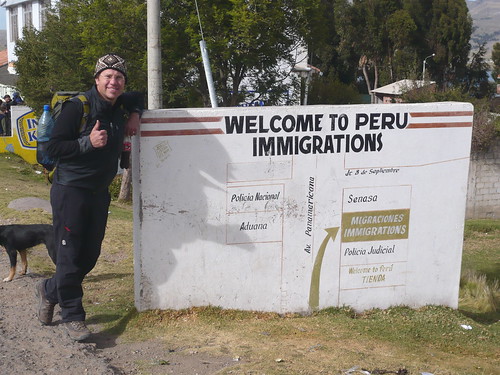
So, Peru received an open entrance gringo smile.

P1000329

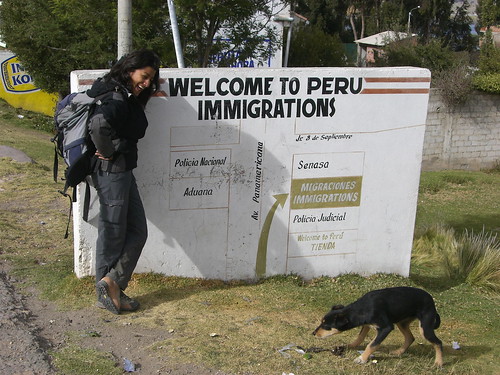
Hassle and Visa excise free Lipika seemed unfazed by the boarder crossing with an EU passport, focusing instead on a perky pup wanting a handout.

CIMG8660

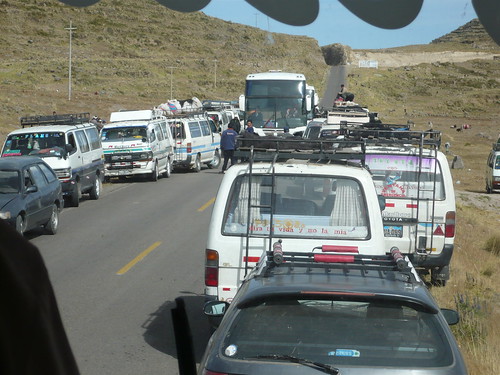
On the drive to Puno, we encountered an interesting phenomenon.  To the untrained eye, one wouldn't know that this was a major passenger van station.  It literally was a straight portion of road where vans pulled off on either side to exchange north and south bound goods and passengers.  Never mind that this was the only trade and passenger route north, we waited for the better part of 20 minutes for the vans to settle down and then allow southbound traffic to flow, before we finally started for Puno once again, via this artificially constricted single lane gauntlet.

P1000331

I really wish that my perspective on the day could have been more positive, but in reality we definitely wished for more time in Copacabana.  So as needed as yesterday's rest had been, the palliative recuperation wasn't complete and we were both a little "cranky".  So Puno was reduced to just another town with a "Plaza de Armas" adorned with requisite cathedral, ...

P1000339

... another "Parque" celebrating Spanish independence, ...

P1000336

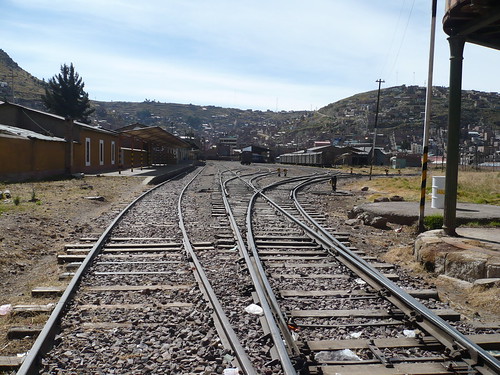
.. relatively historic rail lines, ...

P1000337

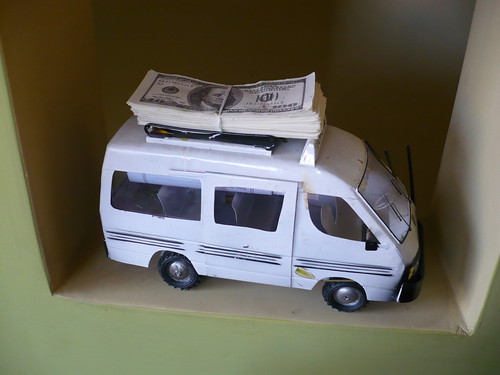
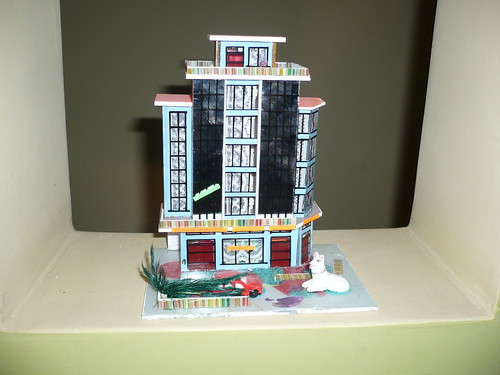
... and a crappy hotel that would never live up to the Copacabana Cupola.  Interestingly enough, the tradition of making miniatures of what one desires and getting it blessed in Copacabana is alive and well in this neighboring city of Puno, Peru in spite of the necessary border crossing.  (Funny that the concept of wealth is still in US currency.) 

P1000469

Progress towards these "blessed" goals is moving in the right direction.  The first two floors of the actual hotel are complete, so maybe the future floors will follow in time.

P1000467

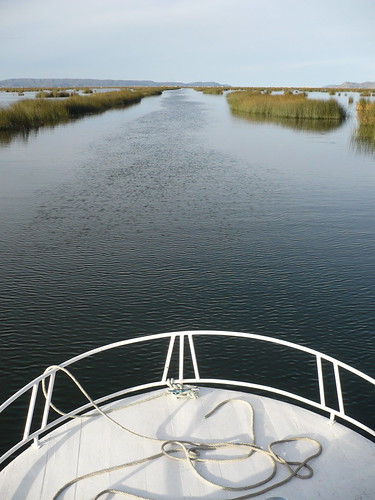
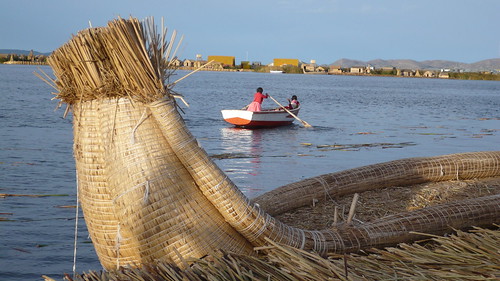
In reality, we hadn't come to Puno for the town but to visit the resourceful Uros People.  After decades of invasion and looting from the Collas and Incas the Uros took to Lake Titicaca.  The surrounding bay is filled with totora reeds, which have a natural buoyancy.  So instead of waiting until morning we joined a chartered evening cruise.

P1000356

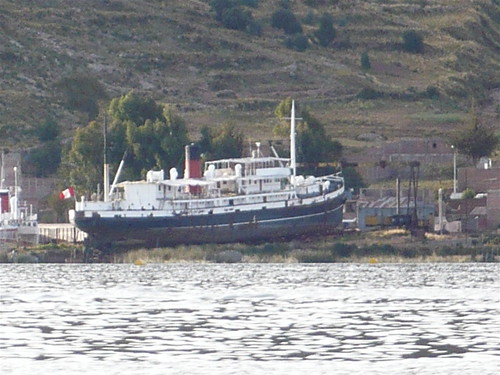
Along the channel our vessel passed a much more historic craft, the Yavari.  What makes this ship so impressive was its path to creation.  The Yavari is a British commissioned iron hulled, coal fired (or here in Peru dried llama dung fired) steamer, entirely reconstructed on the shores of Lake Titicaca from crated materials sailed around Cape Horn, delivered to the town of Arica and then delivered by train to the foothills of the Andes.  At that point, the thousands of parts were packed on mules and delivered to Puno, where it was reassembled for launch in the year 1870.  The Peruvian Navy abandoned the ship to mothball and rust until a non-profit acquired the vessel for conservation and reconstruction.  The hope is to have the roughly 140 year old ship ready for floating tours in a few years.

P1000351

Safely off the coast of Puno, the Uros strategy (similar to that of the Venetians) was effective in limiting the raiding potential of their warring enemies.  A few hundred inhabitants still live on five main floating islands.  The central island comes complete with school and local government.  Guide books tout the tourist experience as "shockingly commercialized" and the exposure did have the marginal authenticity of a Waikiki luau.

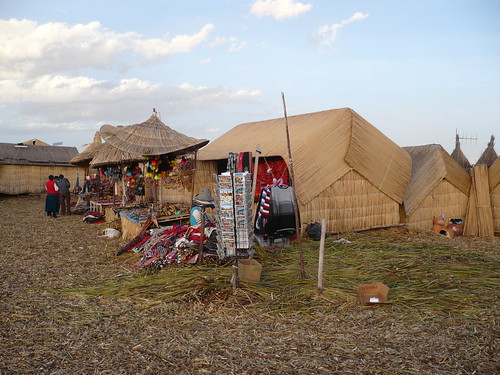
P1000376

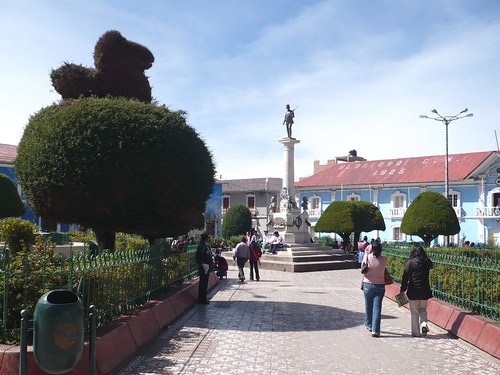
As the boat pulled up along side the island, no one seemed to question the durability or seaworthy nature of the floating grass layers.  Ignorance may be bliss, so what the heck, I jumped off as well.
P1000391

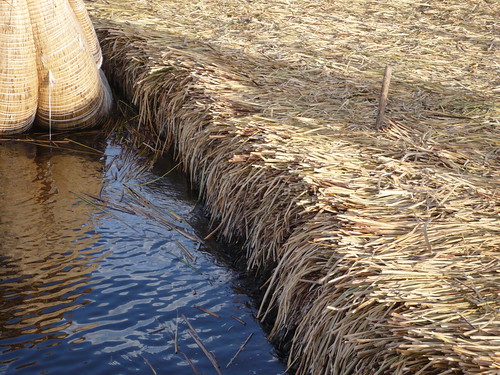
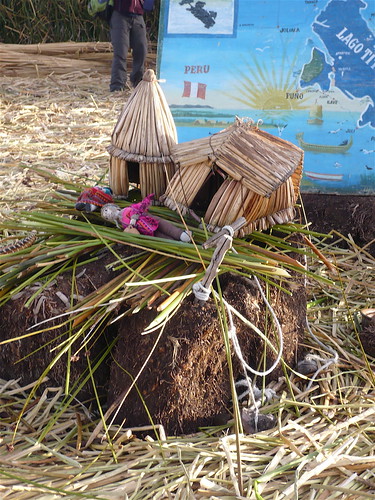
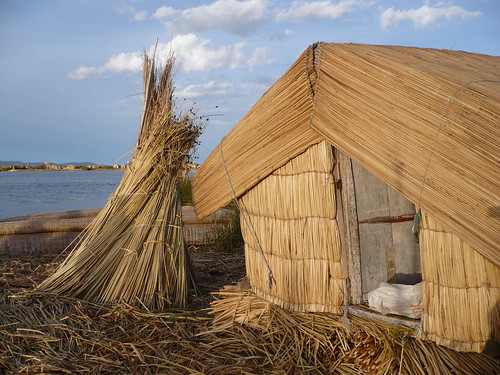
A local guide helped to shed some structural light on exactly how this aqua terra firma was constructed.  As it turns out the actual reeds are just a "top dressing" for the true firmament, a naturally occurring and harvested "peat layer" under the water fields of totoa reeds.  Closer to shore, buoyant cubes of root bound peat are cut, culled and towed by boat out to the floating islands.  The reed top layer is then pealed back and a new layer of peat is added and sown into the floating mass.  When a level layer is completed, then the top treatment of cut reed is replaced.  The deepest, under water, layers continually erode, so the replenishment process is continual and systematic.  Interestingly, the islands are not fixed but anchored via a system of ropes to the lake floor, therefore making them theoretically mobile.  (Structural demonstration model below.)  

P1000411

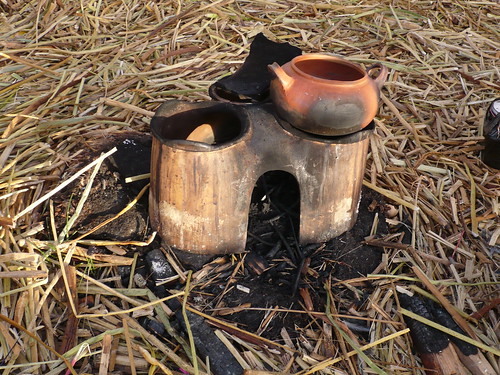
The reeds are naturally moist enough for cooking ember placement directly on top of the surface layer, without fear of setting it or the peat layer afire. 

P1000419

Despite commercialization by the Uros, a setting sun scene was really quite beautiful, releasing imagination of what historical "true life" might have been.

P1000426

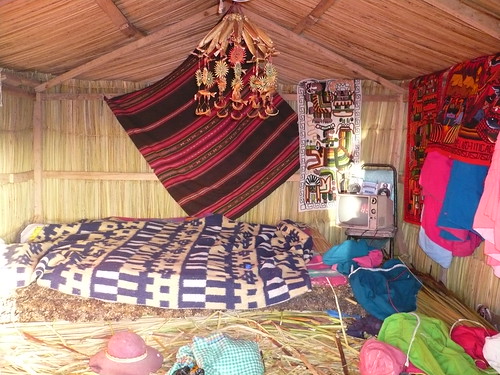
For today, could one expect anything less than electricity and televisions, even in this isolated waterborne environ?

P1000421

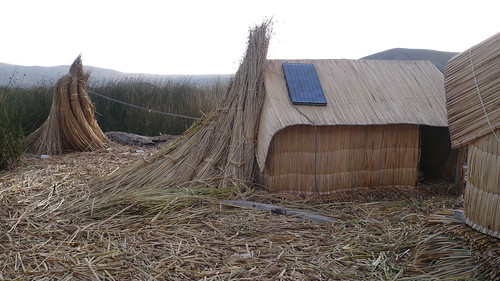
I suppose the efficiency of solar panels makes a lot more sense than stringing underwater electrical cabling out to a moving populous target.

P1000430

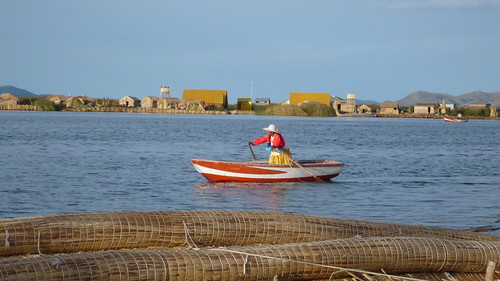
Technology advances in all forms, with lumbering reed boats being replaced by more nimble rowboats.  

P1000395

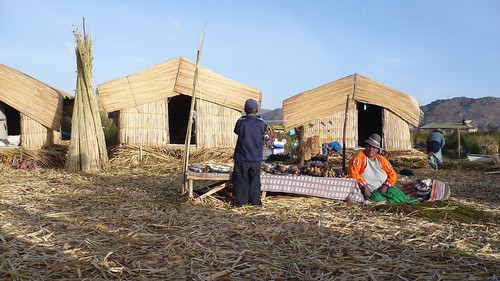
As long as the tourists will spend a dollar, blame really can't be lain for the cultural equivalent of "strip malls" adorned with trinkets and hand woven goods.

P1000440

And if the "strip mall" is fair game, then so is the "mom and pop" convenience store.

P1000397

Lipika thought long and hard about this hand woven tapestry of native design, but ultimately "backpack space" prevailed and we left the island physically empty handed...

P1000446

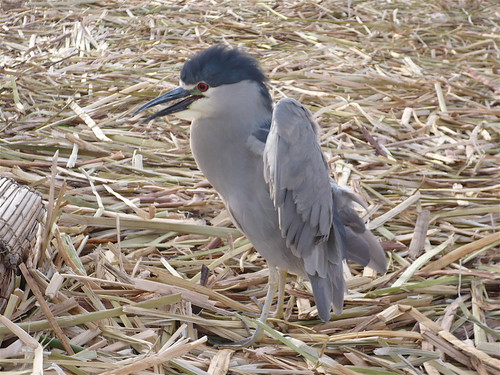
... but not without a few decent shots.  This red-eyed bird was practically tame and a beautiful specimen.

P1000436

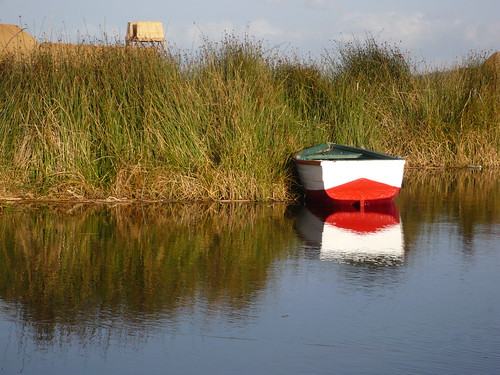
What's not to love about water, a setting sun, and reflections?

P1000413

We were treated with a visual contrast of the historic man-powered reed boat (in the foreground), and the relative ease of a family pram, propelled by a single ten year old girl guiding her bow sprawled younger sister.

P1000407

In spite of the "Disneyland Affect" the local Uros people were friendly and easy to release a smile, which at least made the experience for two sceptical gringos go a little more smoothly.

P1000444

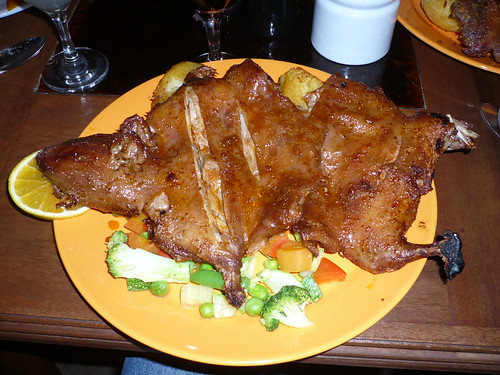
Back in Puno, this Cuy couldn't muster a smile, but not many things can after being deep fried.  Every year I try to eat something completely different and fried guene pig should fit the annual bill.   

P1000452

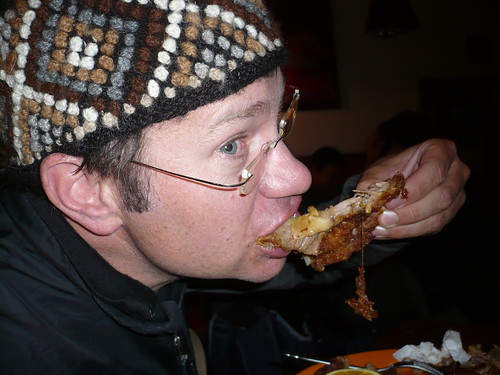
Actually, in Peru, Cuy is a specialty food for celebrating festivals or special occasions.  Unlike the locals, who prize the skin and fat layer beneath, I stuck strictly to what dark meat could be found.  This was not exactly a filling meal and one not recommended for the gastronomically questioning.

P1000458

Lipika was absolutely "not game" for the experiment, which is totally fine, however the highlight of the day was meeting up with Morgan and Kelly once again.  I love how travel plans can naturally overlap in continental travels, especially with good folk like these two.  We had traveled together in the Pantanal of Brazil and Samaipata, Bolivia.  They are fun natured Aussie's who tried one fried and one baked Cuy between them.  I think the general consensus was to "go for fried".  Smiles all around and that was a good way to end the day!

P1000466

04.29.08 - Copacabana


Overcoming Denial with a Birthday Gift

At times, the speed of life serves as a helpful tool, aiding in the prolonging of denial.  But then, denial eventually over stays its welcome, gradually dragging one down until no rushing momentum can delay the inevitable facing of fact.  I (we) had reached just such a precipice.  No matter how many exhaustive day trips we tried to cram in between our "Death Road" experience in La Paz and today, doing personal business with Ken's death needed direct individual exposure.  While hiking on Isla del Sol we almost literally bumped into a couple who had been on the biking trip with us.  Instead of taking the "refund option" they decided to accept a re-booking.  For their efforts, they did finish biking down the "World's Most Dangerous Road" right past the scene of eight more deaths.  Maybe we needed this reminder to "do business" with our emotional connection to the experience.  Either way Lipika and I were both craving a vacation from our vacation.  Unfortunately, the room in which we were staying was booked for tonight, but while eating breakfast the hotel manager offered us a bungalow for the same rate.  Taking a walk down the trail, the welcoming vista and contemplative setting made this decision a "no brainer".

P1000270

This was exactly what was needed:  beautiful stained glass windows, outdoor hammocks, ...

CIMG8633

... harbor views from the second floor, ...

P1000264

... an efficiency kitchen for many rounds of hot tea, ...

CIMG8652

... and a super cool hand-hewn hot shower (complete with live plants).

P1000319

Outside on the lawn, there was a view of possibly the most interesting architectural house in Copacabana.  (I wonder if it belongs to the German owner of the hotel complex?)

CIMG8631

Deep in thought and trying to think through the calendar of the remaining days in South America, Lipika caught me off guard.  It was chilly outside but the sun and lake side air beckoned, so long as the laptop battery lingered.

CIMG8632

About two in the afternoon we headed into town, passing by the hotel staff busy with a game of volleyball.  All that was needed was a garden hose for boundaries, a string tied between two poles for a net, a ball, and a willingness to share some fun.  The balance between the competitive and gentile natures was fun to witness.  There was no "spiking" of the ball, but a well placed strategic shot was applauded by both sides.
P1000267

Wandering down towards the internet cafe uncovered hidden secrets, like this rose arbor lining a restaurant path.

P1000268

I buried the afternoon in the internet cafe, hopelessly trying to catch up, with more than six weeks of blogging in arrears, while Lipika ambled in an effort to find some "retail therapy".

CIMG8640

On the approach to town, I noticed the Cerro Calvario, a 3,966 meter hill just to the north, which of course must be climbed.

P1000035

While Lipika called her boyfriend Dirk, I climbed the hill, racing the setting sun.  The low light angles stretched Copacabana's buildings, enlarging the visual footprint of the last Bolivian weigh point before the Peruvian border.

P1000284

Various Catholic monuments adorn the crest of Cerro Calvario, most of which appear to be private family alters.

P1000287

Given the vantage point, this vista is popular with ambitious tourists, so entrepreneurial vendors follow suite.  It is interesting to see the hand painted Coca-cola brand mark on a former sarcophagus, currently used as a "lock box" for tourist refreshments and wares.

P1000301

The light was really tricky and this super long exposure hides the fact that we were nearing darkness.

P1000297

Isla del Sol seemed an impersonal blot of stone out on the edge of Lake Titicaca.  The prior day had not been a bad one and I was grateful for the experience, however the weight of this needed day of recovery inevitably cast a cloud over the memory.

P1000307

Lipika showed up just in time for the final rays of sunset and an exercise in the use of "fill flash".  No fill flash...

P1000308

... and now fill flash.  It must have been a good call.  

P1000310

With the sun setting across Lake Titicaca, in the direction of Peru, the deepening impact of spending the last day in Bolivia struck home.  This is a beautiful, exotic country, whose people can be lovely, while maintaining an overtly anti-American government.  Living the divergent lifestyle of embrace combined with government sanctioned extortion all wrapped in an ecological wonderland leaves me longing for more time in this beautiful place, with cautious optimism held on the side.

P1000294

So, "Happy Birthday" to my sister Kristen, even though I received the gift of regeneration this day I was sending warm wishes your way, into the setting sun.  Cheers.

04.28.08 - Return to Copacabana


A First Time for Everything

After a chilly night in Yumani, I think we were both ready to welcome the sun and head for Copacabana.  Our hotel manager suggested leaving for the ferry an hour and a half early.  (Maybe, since we were the only guests he was trying to clean the rooms early in the day.)  So, reasonably bright and early, we headed for the winding trek downhill to the port.

P1000187

Along the way, we noticed a church yard being put to full use as solar powered brick kiln.  The earthen rectangles hinted to the visual of loyal parishioners, seated in pew rows.

P1000176

Two archeological sites were on the exploration agenda.  First, the Escalera del Inca or stair case of the Inca's, which should lead directly to the port.

P1000191

As we huffed and puffed our morning lungs to life, walking downhill, an elderly native gentleman cruised right past, heading uphill, with complete ease.  (See him by the entrance?)

P1000195

What made the gentleman's trekking ease even more impressive, was that he had just climbed hundreds of steps up the side of the hill on the Escalera del Inca.  This stair case is over 500 years old and in very active use each and every day.

P1000197

Casually enjoying the scenery, there was a rustling noise behind and guess who was washing his hands in the stair case spring water?  As it would turn out, this energy packed man would be our vendor of tickets for a return by boat to Copacabana.  Note the white piece of cloth used as a backpack.  The funny thing was that later he opened his cloth pack and inside was a perfectly kept leather brief case.  So he was a living blend of the traditional and modern literally rolled and bound into one.

P1000202

Never a stranger to a pose, Lipika and I joked about how it could be possible to take an hour and a half to reach the port, when we were practically there in less than fifteen minutes.

P1000200

The town of Yumani literally sprung into existence because of this fount of water.  Uphill, near the top of the stair case, the Fuente del Inca flows directly out of the ground.  This natural source of clean spring water has supplied the local villagers for hundreds of years, with little interruption.

CIMG8604

The port was very quiet and there was well over an hour to kill after securing tickets.

P1000204

So, I ventured up the rocky beach to see what could be found and was met by a pair of green eyes.  This little one must have thought himself to be well camouflaged and hidden because there was hardly a movement while passing by.

P1000215

The use of colors, incorporated into the daily life of Bolivia, has been quite a display.  Even the care in painting this striped wooden dory green on the outside and a complimentary shade of blue inside provides a color field foundation for the hand-woven red wool blanket secured as an outboard motor cover.

P1000209

Rounding a corner, a traditional reed boat came into view.  So, curiosity pushed footsteps down the trail and across a dodgy wooden plank to the stone dock.

P1000212

The detail work of the puma head bowsprits were impressive, but on closer inspection really quite modern in construction.

P1000222

Because each head was hand-made there is individual character to both port and starboard creatures.  When sailing across Lake Titicaca they must appear as dueling leviathan, jockeying for lead position.

P1000223

Returning to the main port, the color display continued.  Local women, topped with bowlers, are far more colorful than their male counterparts.  Since time is a relative thing in Bolivia, it was a good guess that we were finally approaching departure when the indigenous islanders started to gather.

P1000232

I love this picture, which Lipika took, for so many reasons.  It is a great snap shot of where Bolivia culturally stands or in this case sits, today.  Externally, there is much visual tradition, with the added youthful defiance of a modern and practical sun hat.  Internally, as in her carrying blanket stuffed with a modern black case, the outlook is respectfully modernizing.

CIMG8617

This new mother was gorgeous in her hand embroidered dress, fancy felt bowler hat, and colorful carrying blanket.  She was "dressed" for traveling to a destination, as opposed to making a jaunt to the mainland market.

P1000245

Life is always good for providing moments of humility.  While casually baking in the roof deck bench seating, during the two hour trip back to Copacabana, I heard an American accent.  Typically, this is ample reason to turn the other way, but this time the tone seemed benign.  In chatting with the woman across from me, it turns out that Bolivia is her 95th country to visit over the last 5 years.  Wow, 40-something seems pretty meager in comparison.  During the months of Oct-Nov-Dec she does medical device "rep-ing", earning enough to basically fund 8 months of travel.  Kudos, this Detroit native has successfully figured out how to feed the travel addiction. 

P1000250

Copacabana, what a welcome visual!  Typically, I love the water, but the less than 5 mile an hour pace of this overburden, under-powered, glorified skiff was making me anxious to touch earth again.

P1000252

Time for a few hours of pampering.  It was decided to splurge and book a room at the Cupola, a.k.a. the highest rated and most expensive hotel in town... at a whopping $34 USD for the suite.

P1000272

Our two room spread came with top floor views, ...

P1000260

... after climbing the laddered stairs and entering through the oddly placed floor/roof hatch (depending on whether one was ascending or descending).

CIMG8629

The view, hammock, and hot showers we all overly appreciated.  Personally, the extended nap in the hammock was a real winner.

P1000257

Refreshed, relaxed, and revived for blogging, we headed into town to the only local high-speed internet cafe.  By the time I finished, blurry eyed after hours of staring into the screen, it was dark.

P1000254

The Cupola Cafe is already a favorite and in the perfect location.  Unfortunately, given the reputation and appreciation of ex-pats the dining room was entirely full, so we ordered diner to be delivered to the room.

P1000263

When the waiter arrived, I reached into my back pocket to pay... and there was nothing there.  How could I have been so stupid!  Today was literally the first and only time in almost two years of travels that I put cash in my back pocket.  Lipika had given me about $100 USD in Bolivianos to carry and wearing my new sweater it was much too hot to wear my usual backpacking vest (the chest pocket of which is where I typically keep passport and cash).  While ordering dinner at the restaurant's front counter, in a room filled with ex-pats, some guy kept bumping into me and my backpack.  At first this was confusing, because there was plenty of room to pass by, but obviously he was doing the classic "bump and grab" as a distraction to lifting the money from my back pocket.

The travel guides actually warned of rampant petty theft in Copacabana, but stated the greatest occurrence is during rowdy festivals.  The piece left out of the commentary was that much of the larceny is committed by ex-pats who have stayed too long and are a little short.  20/20 hind sight, the restaurant lobby of the Cupola is the perfect "hit zone" because in a total ex-pat environment people let their guard down, subsequently making things just a little too easy for the motivated pick-pocket.